By Elaine Taylor
We’ve been working on a new Civil War tour brochure for Louisa County of late, trying to make those tough determinations of what might hold the most interest, be of greatest importance, etc. Last week I was in the Civil War room at the Sargeant Museum with two other women on the tour committee. We were all three drawn not to the details of the battles, but to the horrendous cost of the war in human and animal suffering.
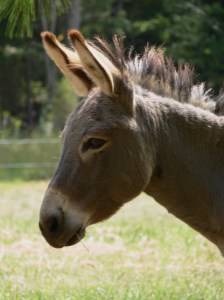
Let me first say that two new burro friend arrived at my neighbor’s barn this weekend. They replace a dear ol’ girl named Patty whose green-teethed smile and raspy bray we all miss, for Patty passed on to the great pasture beyond early this summer. I’ll share my slideshow link later in this post, but I can’t help thinking of what happened during the Civil War just a few miles from here.
The story has always been told (siting most often Malcolm Harris’ history on Louisa County) that up Rt. 522 at Thompson’s Crossroads, about 220 horses and mules were killed, and an equal number at Yancyville, by Union forces determined to hinder the power of the Confederate forces. By Harris’ account, persons living near Thompson’s Crossroads lost everything. “All the corn, bacon, meal, animals One resident reported, “We have been visited three times by Northern raiders and they left us with no corn, meat, oats or fodder. They killed nearly all my hogs and some of the cattle and sheep…”
The destruction of mules and horses at Thompson’s Crossroads intrigues me and so I started searching for some official source to verify the information. After all, if these animals were perfectly fine, why not confiscate them instead of slaughter them…each army was desperate for good mounts and drafts animals. I discovered what I suspect is the truer story in the Official Reports of Gen. George Stoneman’s raid and the Confederate Citizens Claims at NARA. Both relate that Stoneman’s invasion of Louisa County during the severe rains of May 1863 left many of his animals exhausted from the journey through mud and flooded creeks. He did take from local residents any and every animal he could find to replace his useless ones. Those that did not have the strength to leave with him, he indeed slaughtered lest they be rehabilitated and used to sustain the war effort. One free black farmer filed a claim with the Federal Government after the war for two horses which Stoneman’s forces commandeered. In his application (which was approved for payment of compensation) he says “I did not try to hide my horses, as I had always been a Union man and did not think the Northern army would take my horses.”
Regardless of which army was to ‘blame’, the fact is that the war had a devastating effect on Louisa County. The county tax books indicate that about 1/3 of the livestock was lost in the war. Of course, the tax revenue for the county also fell sharply, since 2/3 of the personal property tax base in 1863 was made up of slaves. After the war, they were no longer ‘property’ to be taxed. They themselves had nothing taxable after the way, too, as most began their new life of freedom with nothing of their own.
It’s unthinkable to me that men of conscience could slaughter animals such as my little furry friends at my neighbors except during the horror of war. So much death must blind soldiers to their own normal outrage at what they have to do to men and beasts. But back to my story of burros in 2009.
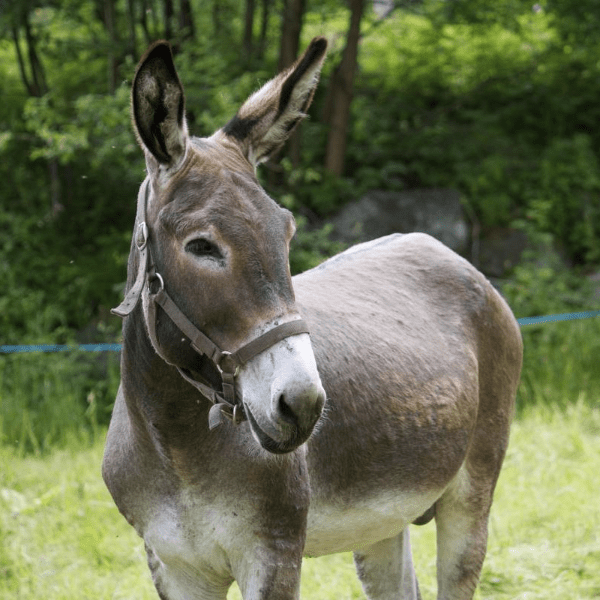
Ol’ Patty is the brown burro you’ll see first in the admittedly whimsical slideshow I just added to YouTube. My neighbors were out of town the night she died and I discovered her the next morning with Higgins (the white burro you’ll see in lots of the pictures!) standing over her, perplexed as to why he couldn’t rouse her with his prodding nose. All summer he has been uncharacteristically subdued while his human friends searched for new companions to share his pasture. Higgins’ new friends arrived today…miniature donkeys, one male and one female. ( the male is shown above) I think the animal friends you make living in the country are good for the soul. Maybe that’s because staring into their honest eyes rekindles the desire to handle the world we share with them wisely- for their sake and for ours. And maybe, too, they remind us to never forget to enjoy the smallest patch of shade on an August day, or the first sweet grass of spring, or the company of friends. Oh, I promised pictures. You can click here and find them…and a little music to boot!.

 Discussions about the lesser known parts of Louisa County History